

Hey there! I'm a supplier of PA Interlining, and today I'm super stoked to chat with you about the materials used in PA Interlining.
PA Interlining, as many of you might know, is a crucial component in the world of bags and suitcases. It adds structure, support, and durability to these products, making them more functional and long - lasting. And the materials we use play a huge role in determining the quality and performance of the PA Interlining.
Polyamide (PA) Fibers
The most obvious and primary material in PA Interlining is, of course, polyamide. Polyamide is a synthetic polymer that's known for its excellent strength, abrasion resistance, and flexibility. It's what gives PA Interlining its ability to hold up under pressure and keep its shape over time.
One of the great things about polyamide is its high melting point. This means that during the manufacturing process of bags and suitcases, when heat is often applied for bonding or shaping, the PA Interlining won't easily deform. It maintains its integrity, which is super important for ensuring the final product's quality.
Another advantage of polyamide is its moisture - wicking properties. It can absorb and release moisture relatively quickly, which helps in preventing the growth of mold and mildew inside the bags. This is especially useful for luggage that might be exposed to different environmental conditions during travel.
Blended Fibers
In many cases, we don't just use pure polyamide in PA Interlining. We often blend it with other fibers to enhance certain properties. One common blend is with polyester. Polyester is a very versatile fiber that offers good dimensional stability and resistance to shrinking and stretching. When blended with polyamide, it can further improve the shape - retention of the PA Interlining.
For example, in some high - end bags, the PA Interlining might have a blend ratio of 70% polyamide and 30% polyester. This combination gives the interlining the strength and flexibility of polyamide while also benefiting from the stability of polyester. The result is a more reliable and long - lasting interlining that can withstand the rigors of daily use.
Adhesive Materials
To make the PA Interlining work effectively in bags and suitcases, we also use adhesive materials. These adhesives are responsible for bonding the interlining to the outer fabric of the bag. There are different types of adhesives available, and the choice depends on various factors such as the type of fabric, the manufacturing process, and the desired performance.

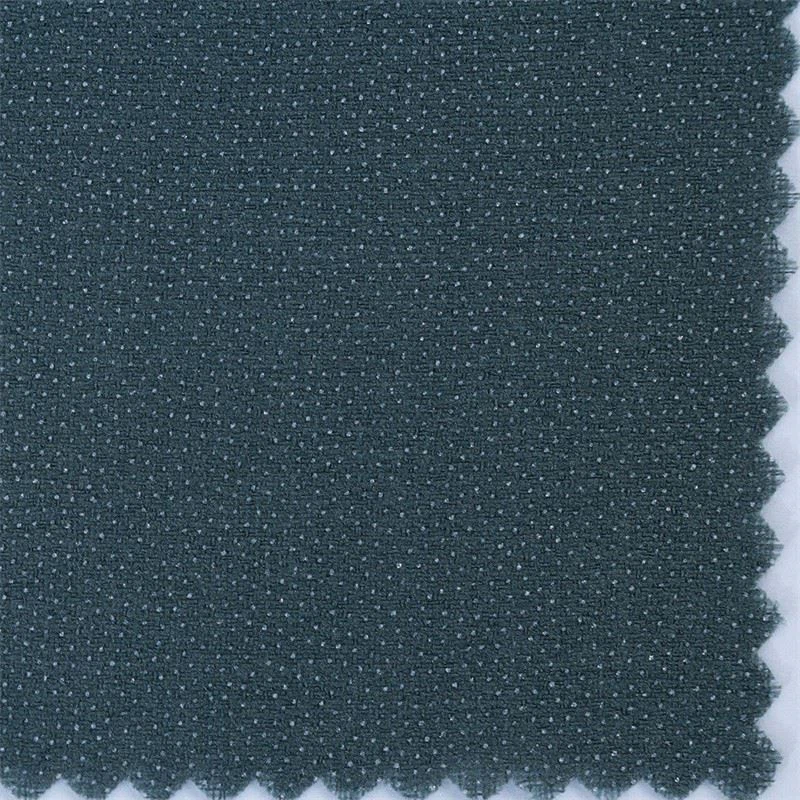
One popular type of adhesive is hot - melt adhesive. It's applied in a molten state and then solidifies quickly to form a strong bond. Hot - melt adhesives are preferred in many cases because they offer a fast and efficient bonding process. They also have good resistance to heat and chemicals, which is important for maintaining the bond integrity over time.
Another option is water - based adhesive. This type of adhesive is more environmentally friendly as it doesn't contain harmful solvents. It's also suitable for bonding certain types of delicate fabrics without causing damage. However, water - based adhesives might take longer to dry compared to hot - melt adhesives.
Reinforcing Elements
Sometimes, we add reinforcing elements to the PA Interlining to make it even stronger. For instance, we might incorporate thin metal wires or fiberglass strands. These elements can significantly increase the tensile strength of the interlining, making it more resistant to tearing and pulling.
In bags that are designed to carry heavy loads, such as large suitcases or backpacks, the use of reinforcing elements in the PA Interlining is crucial. They ensure that the bag can maintain its shape and integrity even under extreme stress.
Comparison with Other Types of Interlining
Now, let's take a quick look at how PA Interlining compares with other types of interlining, like PET Interlining and High Elasticity Interlining.
PET Interlining, which is made primarily from polyester, is known for its low cost and good dimensional stability. However, it might not have the same level of strength and flexibility as PA Interlining. PA Interlining is generally more suitable for applications where higher durability and shape - retention are required.
On the other hand, High Elasticity Interlining is designed to provide a high degree of stretchability. It's often used in bags that need to conform to different shapes or have a more flexible design. PA Interlining, while it has some flexibility, is more focused on providing structure and support rather than extreme stretchability.
Our Product Range
As a PA Interlining supplier, we offer a wide range of products to meet the diverse needs of our customers. We have different grades of PA Interlining, each with its own set of properties and performance characteristics. Whether you're looking for a basic interlining for a simple tote bag or a high - performance interlining for a luxury suitcase, we've got you covered.
We also customize our products according to specific requirements. If you have a unique design or performance needs for your bags, we can work with you to develop a customized PA Interlining solution.
Why Choose Our PA Interlining?
There are several reasons why you should choose our PA Interlining. Firstly, we use high - quality materials in our manufacturing process. We source the best polyamide fibers and adhesives to ensure that our interlining meets the highest standards of quality.
Secondly, we have a team of experienced professionals who are dedicated to producing top - notch products. They monitor every step of the manufacturing process to ensure consistency and quality control.
Finally, we offer competitive pricing without compromising on quality. We understand that cost is an important factor for our customers, and we strive to provide the best value for money.
Let's Connect
If you're in the market for PA Interlining, I'd love to have a chat with you. Whether you have questions about our products, need a sample, or want to discuss a potential order, don't hesitate to reach out. We're here to help you find the perfect interlining solution for your bags and suitcases. Check out our PA Interlining page for more details and let's start this exciting journey together!
References
- Textile Chemistry and Technology by Herbert Mark
- Handbook of Fiber Science and Technology Volume 1: High - Performance Fibers by Menachem Lewin and Eli M. Pearce