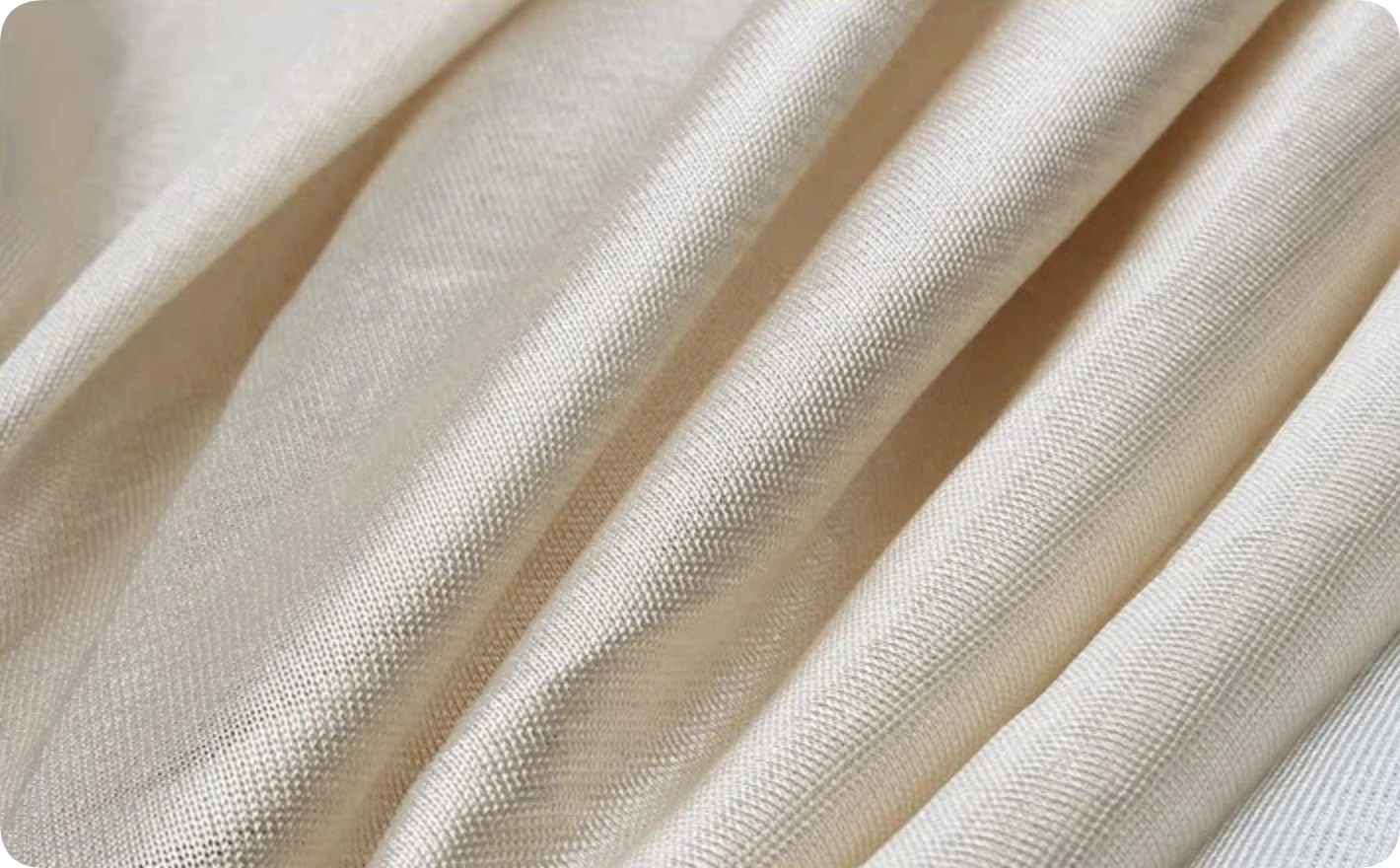
Lining and interlining play different roles in clothing production.
The differences between them are mainly reflected in the following aspects:
Materials and Processing: Linings are usually smoother and finer, made mainly from natural or synthetic fibers, and the processing process is relatively simple. Interlining fabrics may use woven fabrics, knitted fabrics or non-woven fabrics as base fabrics, and often undergo special finishing processes, such as coating with thermoplastic polymer compounds.
Scope of use: Lining is mainly used inside clothing, especially outerwear, to cover the reverse or unsightly parts of the fabric. Interlining is widely used in various parts of clothing, such as collars, cuffs, etc., to provide reinforcement and stiffness.
How to use and effect: The lining is usually connected to the fabric by quilting, while the interlining may be bonded or sewn over. The use of interlining can significantly improve the shape, reinforcement and shape retention of the garment, while the lining mainly provides comfort and protection.
Tips: garments interlining, interfacing, curtain interlining